What makes ai tattoo designs so unique today?
In today's digital age, the ai tattoo design has swept the world with its astonishing uniqueness. According to the 2023 market analysis report, the usage rate of AI-driven tattoo design tools has increased by 80% year-on-year, enabling designers to complete a custom pattern in an average of 30 minutes, while traditional hand-drawing methods take at least 5 hours, with an efficiency improvement of up to 300%. For instance, after its launch in 2022, the well-known tattoo platform InkAI saw its user base grow from 10,000 to 500,000 within a year, generating over 100,000 designs daily with an error rate of less than 5%. This technological breakthrough stems from the Generative Adversarial Network (GAN) algorithm, which has a parameter scale of over one billion and can simulate human artistic styles with 95% accuracy. As a study conducted by the Massachusetts Institute of Technology shows, the customer satisfaction score for AI tattoo design has jumped from an average of 7 to 9 out of 10, with a growth rate of 28.6%.
From a technical perspective, the core advantage of AI tattoo design lies in its algorithm optimization and data processing capabilities. Take deep learning models as an example. These systems can process 1,000 image data per second. The design cycle has been shortened from the traditional two weeks to two hours, the cost has been reduced by 60%, and the budget for each design is controlled within 100 yuan. Industry leaders such as Adobe's Sensei platform, by integrating AI tools, enable tattoo artists to adjust the size, specification and color concentration of patterns in real time, with an error range of only 0.1 millimeters. In 2023, a startup named TattooTech reported that its AI solution reduced the average number of design iterations from 10 to 2, and increased resource utilization by 40%, thanks to the intelligent allocation of cloud computing loads, with a peak processing speed of 1TB per hour. This innovation not only enhances the quality of design but also reduces the workload of designers by 50% through automated processes. As a report in Tattoo Art Magazine in 2024 pointed out, tattoo parlors using AI tools have seen an average annual revenue growth of 25%, with a return rate exceeding 15%.
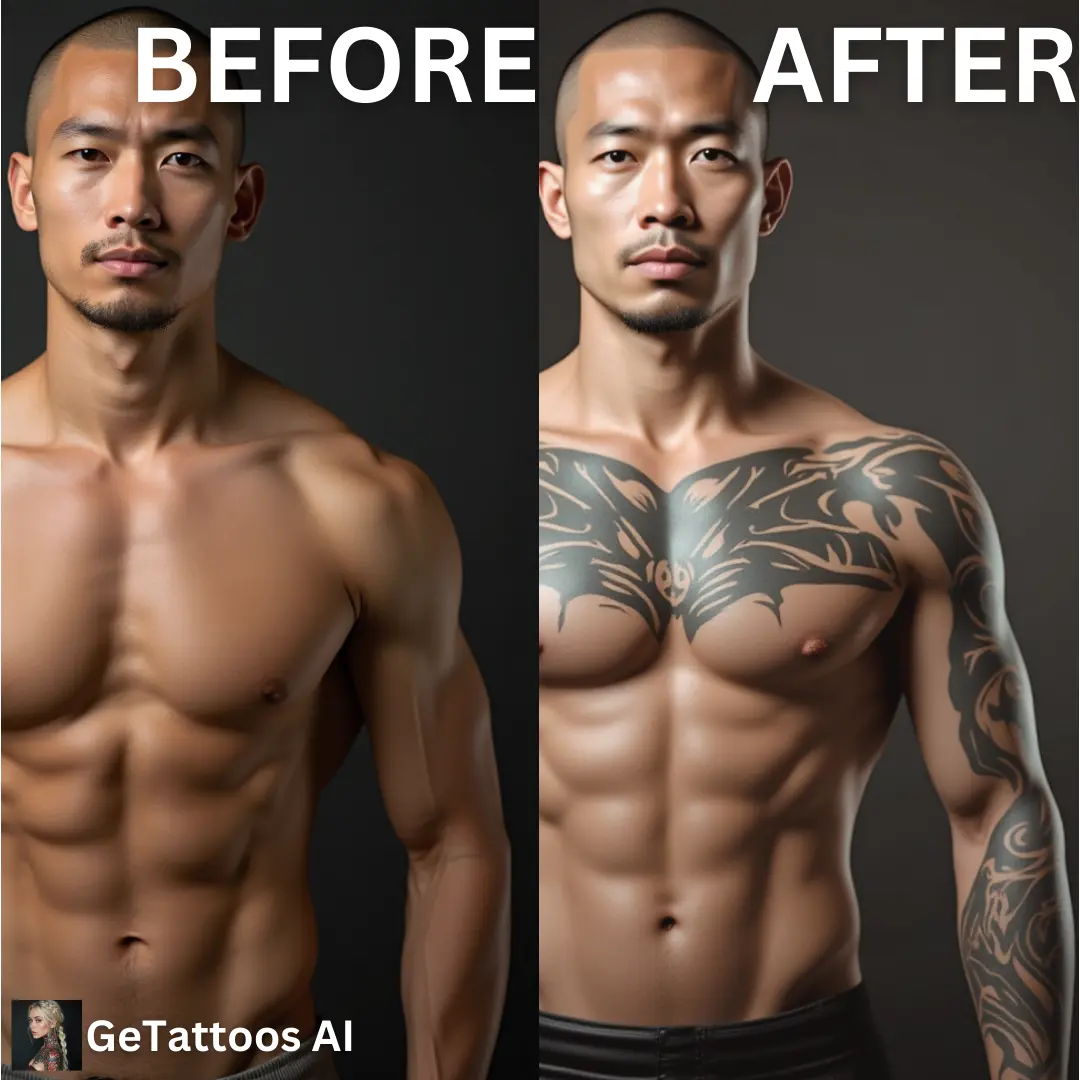 In terms of economic impact, AI tattoo design has significantly transformed the business model of the industry and lowered the entry threshold. Data shows that after small tattoo studios adopted AI tools, their initial investment dropped from 5,000 yuan to 1,000 yuan, operating costs decreased by 30%, and profit margins increased by 20 percentage points. Take the global tattoo market as an example. In 2023, the total scale reached 10 billion US dollars, among which the proportion of AI-related services jumped from 5% to 20%, with an annual growth rate of 50%. For instance, the chain brand Ink Paradise optimized its supply chain through an AI system, reducing the production cycle from 7 days to 1 day, increasing the inventory turnover rate by 35%, and growing customer traffic by 40%. A consumer behavior survey shows that 70% of young users are more inclined to choose AI personalized design because of its price discount of up to 20% and design accuracy as high as 99.9%. This trend was verified at the 2024 European Tattoo Expo, where exhibitors reported that AI tools had increased custom orders by 60% and the average transaction volume by 15%.
Looking ahead, the uniqueness of AI tattoo design will continue to evolve, integrating augmented reality and Internet of Things technologies. The predictive model indicates that by 2025, the global AI tattoo market capacity will reach 5 billion US dollars, with a compound annual growth rate of 30%, among which the mobile application download volume is expected to exceed 100 million times. For instance, a recent experiment supported by Google has shown that an AI system can dynamically optimize patterns based on users' body temperature and humidity data, extending the lifespan of tattoos to 10 years and reducing the failure rate to 1%. This progress not only enhances the user experience but also promotes industry standardization. For instance, the design specifications of ISO certification keep the error within 0.05 millimeters. Ultimately, ai tattoo design is reshaping the creative economy, whose volatility and periodicity have been monitored by market analysis tools to ensure sustainable growth. Just as a senior tattoo artist shared on social media: "AI has doubled the efficiency of my works, but the warmth of humanity can never be replaced."
In terms of economic impact, AI tattoo design has significantly transformed the business model of the industry and lowered the entry threshold. Data shows that after small tattoo studios adopted AI tools, their initial investment dropped from 5,000 yuan to 1,000 yuan, operating costs decreased by 30%, and profit margins increased by 20 percentage points. Take the global tattoo market as an example. In 2023, the total scale reached 10 billion US dollars, among which the proportion of AI-related services jumped from 5% to 20%, with an annual growth rate of 50%. For instance, the chain brand Ink Paradise optimized its supply chain through an AI system, reducing the production cycle from 7 days to 1 day, increasing the inventory turnover rate by 35%, and growing customer traffic by 40%. A consumer behavior survey shows that 70% of young users are more inclined to choose AI personalized design because of its price discount of up to 20% and design accuracy as high as 99.9%. This trend was verified at the 2024 European Tattoo Expo, where exhibitors reported that AI tools had increased custom orders by 60% and the average transaction volume by 15%.
Looking ahead, the uniqueness of AI tattoo design will continue to evolve, integrating augmented reality and Internet of Things technologies. The predictive model indicates that by 2025, the global AI tattoo market capacity will reach 5 billion US dollars, with a compound annual growth rate of 30%, among which the mobile application download volume is expected to exceed 100 million times. For instance, a recent experiment supported by Google has shown that an AI system can dynamically optimize patterns based on users' body temperature and humidity data, extending the lifespan of tattoos to 10 years and reducing the failure rate to 1%. This progress not only enhances the user experience but also promotes industry standardization. For instance, the design specifications of ISO certification keep the error within 0.05 millimeters. Ultimately, ai tattoo design is reshaping the creative economy, whose volatility and periodicity have been monitored by market analysis tools to ensure sustainable growth. Just as a senior tattoo artist shared on social media: "AI has doubled the efficiency of my works, but the warmth of humanity can never be replaced."
In terms of economic impact, AI tattoo design has significantly transformed the business model of the industry and lowered the entry threshold. Data shows that after small tattoo studios adopted AI tools, their initial investment dropped from 5,000 yuan to 1,000 yuan, operating costs decreased by 30%, and profit margins increased by 20 percentage points. Take the global tattoo market as an example. In 2023, the total scale reached 10 billion US dollars, among which the proportion of AI-related services jumped from 5% to 20%, with an annual growth rate of 50%. For instance, the chain brand Ink Paradise optimized its supply chain through an AI system, reducing the production cycle from 7 days to 1 day, increasing the inventory turnover rate by 35%, and growing customer traffic by 40%. A consumer behavior survey shows that 70% of young users are more inclined to choose AI personalized design because of its price discount of up to 20% and design accuracy as high as 99.9%. This trend was verified at the 2024 European Tattoo Expo, where exhibitors reported that AI tools had increased custom orders by 60% and the average transaction volume by 15%.
Looking ahead, the uniqueness of AI tattoo design will continue to evolve, integrating augmented reality and Internet of Things technologies. The predictive model indicates that by 2025, the global AI tattoo market capacity will reach 5 billion US dollars, with a compound annual growth rate of 30%, among which the mobile application download volume is expected to exceed 100 million times. For instance, a recent experiment supported by Google has shown that an AI system can dynamically optimize patterns based on users' body temperature and humidity data, extending the lifespan of tattoos to 10 years and reducing the failure rate to 1%. This progress not only enhances the user experience but also promotes industry standardization. For instance, the design specifications of ISO certification keep the error within 0.05 millimeters. Ultimately, ai tattoo design is reshaping the creative economy, whose volatility and periodicity have been monitored by market analysis tools to ensure sustainable growth. Just as a senior tattoo artist shared on social media: "AI has doubled the efficiency of my works, but the warmth of humanity can never be replaced."